
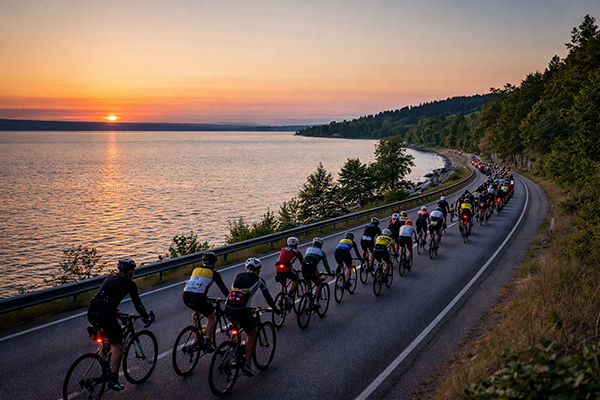
The Vätternrundan is one of the most famous endurance cycling events in the world. Riders who decide to train for Vätternrundan quickly discover that the challenge is very different from typical sportives or gran fondos. Covering roughly 300 kilometres around Lake Vättern in Sweden, the event demands sustained endurance, disciplined pacing, and careful energy management for what is often a ride lasting well over ten hours.
Unlike mountainous cycling events where steep climbs dominate the challenge, Vätternrundan is defined by its sheer distance and the need to maintain consistent effort over an extremely long period. Riders often start late in the evening or during the night, meaning the event combines endurance riding with sleep management, changing temperatures, and long hours in the saddle.
For athletes preparing in Scandinavia or elsewhere in Europe, structured cycling coaching in Sweden can help replicate the endurance demands of the event and build the pacing discipline required for such a long ride.
Why Vätternrundan Is So Challenging
Anyone planning to train for Vätternrundan should understand that the real difficulty lies not in steep climbs but in the relentless duration of the event. Riding 300 kilometres requires a completely different pacing strategy than shorter endurance rides.
The course circles Lake Vättern, passing through several Swedish towns and rolling countryside. While the terrain is generally considered manageable, the cumulative fatigue from hours of pedalling can gradually wear riders down if they start too aggressively.
Weather also plays a role. Because riders often start during the evening and continue through the night, temperatures can fluctuate significantly. Riders may experience cool night air followed by warmer daytime conditions later in the ride. Wind coming across the lake can also influence pacing and group dynamics.
The Fitness Demands of Vätternrundan
The physiological demands of the event mean that riders who want to train for Vätternrundan must prioritise aerobic endurance above everything else. The ability to sustain moderate power output for many hours is the most important quality for success.
Unlike shorter races that involve frequent bursts of intensity, Vätternrundan rewards riders who maintain a smooth, controlled effort throughout the day and night. Riders who keep their effort within sustainable limits early in the ride are far more likely to finish strongly.
Fatigue resistance becomes increasingly important as the ride progresses. Spending ten or more hours on the bike requires both physical and mental resilience. Neck, shoulders, and lower back muscles can become fatigued over time, making comfort and bike position particularly important.
How to Structure Training for Vätternrundan
A successful training plan to train for Vätternrundan should begin with developing a strong aerobic base. Long endurance rides performed at moderate intensity help riders gradually build the durability required for such a long event.
Consistency is far more valuable than occasional extreme training rides. Riders benefit from gradually extending the duration of their long rides over several months, allowing the body to adapt safely to increasing workloads.
Group riding can also play a major role in preparation. Many participants ride Vätternrundan in organised groups that share pacing responsibilities. Practicing smooth group riding, drafting, and communication during training rides can significantly improve efficiency during the event.
Nutrition strategies should also be practiced regularly. Riders must consume carbohydrates consistently throughout the ride to avoid energy depletion. Testing nutrition plans during long training rides ensures the body can tolerate the products used during the event.
Equipment and Preparation Considerations
Choosing comfortable and reliable equipment is essential for riders who train for Vätternrundan. Because the event is so long, even small comfort issues can become significant problems after several hours.
Bike fit is particularly important. Riders should ensure their saddle position, handlebar reach, and overall riding position are comfortable for extended periods. Small adjustments made during training can prevent discomfort later in the ride.
Lighting equipment may also be required depending on the rider’s start time. Since many participants begin the ride during the evening or night, reliable front and rear lights are necessary for safety.
Clothing should be selected carefully as well. Temperatures can drop significantly during the night, so layering options allow riders to stay comfortable as conditions change.
Common Mistakes Riders Make
One of the most frequent mistakes riders make when they train for Vätternrundan is starting too fast. The excitement of the event and the presence of large riding groups can encourage riders to push harder than planned during the early hours.
Another mistake is failing to practice nutrition during training. Riders who rely solely on aid stations without testing their fueling plan may find it difficult to maintain energy levels during the ride.
Many riders also underestimate the mental aspect of such a long event. Spending many hours on the bike requires focus and patience, especially during the quiet night sections of the course.
How Coaching Can Help
Preparing for extremely long endurance events often benefits from structured guidance. Riders who want to train for Vätternrundan efficiently may find that personalised coaching helps them balance training volume with recovery.
A coach can design progressive long rides, incorporate endurance intervals, and help riders refine pacing strategies. Coaching can also assist with equipment choices, fueling plans, and race-day logistics.
If you are preparing for Vätternrundan or similar endurance events, working with an online cycling coach can provide structure and accountability. Riders across Europe can also explore our European cycling coaching services designed for endurance athletes targeting major sportives.
Final Thoughts
For riders preparing to train for Vätternrundan, patience and pacing discipline are the keys to success. The event rewards riders who approach the challenge with a steady, controlled strategy rather than those who rely on bursts of speed.
By building aerobic endurance gradually, practicing nutrition and pacing, and preparing for the unique demands of long-distance riding, cyclists who train for Vätternrundan can experience one of the most rewarding endurance events in the cycling world.