
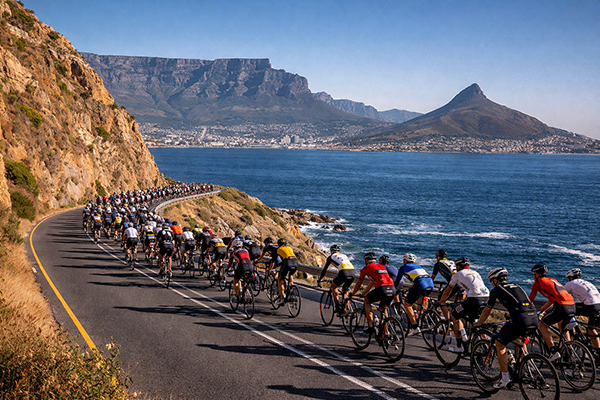
The Cape Town Cycle Tour is widely regarded as one of the most spectacular road cycling events in the world. Riders who decide to train for Cape Town Cycle Tour quickly realise that the event combines breathtaking scenery with a surprisingly demanding endurance challenge. Taking place around the Cape Peninsula in South Africa, the race attracts tens of thousands of amateur cyclists each year and follows a route that includes coastal roads, rolling climbs, and exposed sections where wind can dramatically influence the outcome of the day.
Although the official distance of roughly 109 kilometres may appear manageable compared with ultra-endurance events, the combination of climbing, fast group riding, and unpredictable coastal winds makes the race far more challenging than many riders expect. Success therefore depends not only on fitness but also on pacing discipline, positioning within groups, and confidence riding in large pelotons.
For athletes targeting this event from South Africa or abroad, working with structured cycling coaching in South Africa can help replicate the unique terrain and conditions riders encounter during the race.
Why the Cape Town Cycle Tour Is So Challenging
Anyone looking to train for Cape Town Cycle Tour should understand that the race is shaped by a combination of terrain and environmental factors. The route circles the Cape Peninsula and includes famous sections such as Chapman’s Peak Drive, which offers stunning views but also presents sustained climbing challenges.
Wind is one of the defining elements of the event. Coastal sections of the route are often exposed to strong gusts coming off the Atlantic Ocean. Riders who position themselves poorly within groups can expend significant extra energy fighting headwinds, while those who ride efficiently in a pack can conserve valuable strength.
The event also features several rolling climbs that gradually accumulate fatigue throughout the ride. Riders who pace these sections carefully often find themselves finishing strongly, while those who push too hard early in the race may struggle during the latter stages.
The Fitness Demands of the Cape Town Cycle Tour
The physiological demands of the race mean that riders planning to train for Cape Town Cycle Tour should focus on building a strong aerobic engine combined with the ability to respond to changes in pace. While the race distance is shorter than many endurance events, the intensity of group riding can make it surprisingly demanding.
Aerobic endurance forms the foundation of preparation. Riders must maintain steady power output across more than one hundred kilometres while still having the capacity to respond to accelerations within the peloton.
Climbing ability is also important. Although the climbs are not extremely long, they often occur after sustained periods of riding and therefore require riders to manage fatigue effectively. Riders who can maintain a controlled effort on climbs without exceeding their limits often gain an advantage.
Bike handling and group riding skills should not be overlooked either. The sheer number of participants means that riders often spend large portions of the event surrounded by other cyclists. Confidence in drafting, cornering, and maintaining position within groups can significantly improve both efficiency and safety.
How to Structure Training for Cape Town Cycle Tour
A structured plan to train for Cape Town Cycle Tour should begin with consistent endurance training. Regular long rides help build the aerobic capacity required for sustained efforts while gradually preparing the body for race distance.
Once this endurance base is established, riders should incorporate sessions that simulate the pace changes typical of large group rides. Tempo and threshold intervals performed during longer rides can replicate the accelerations riders experience when responding to attacks, hills, or shifting peloton dynamics.
Climbing sessions should also be included. Repeated hill efforts help develop the strength needed for sections such as Chapman’s Peak and other rolling climbs on the course. Riders benefit from focusing on controlled pacing rather than explosive efforts that may lead to early fatigue.
Group riding practice can also be valuable preparation. Training with other cyclists allows riders to become comfortable drafting, rotating through pacelines, and navigating group dynamics safely.
Equipment and Preparation Considerations
Equipment choices can influence performance when riders train for Cape Town Cycle Tour. Because the course is entirely on paved roads, most riders compete on lightweight road bikes designed for climbing and efficiency.
Wheel choice can also play a role. While aerodynamic wheels may offer advantages on faster sections, riders should also consider the potential impact of crosswinds along coastal areas.
Nutrition planning should be practiced during training rides. Although the event distance may be shorter than ultra-endurance races, riders still need to maintain carbohydrate intake throughout the ride to sustain energy levels.
Hydration is equally important, particularly in warm conditions. Practicing drinking regularly during training helps ensure riders maintain performance throughout the race.
Common Mistakes Riders Make
One of the most common mistakes riders make when they train for Cape Town Cycle Tour is underestimating the impact of wind. Riders who fail to position themselves efficiently within groups often waste unnecessary energy battling headwinds.
Another frequent error is starting too aggressively. With thousands of riders on the road, early excitement can lead cyclists to ride above their sustainable pace. Maintaining controlled effort early in the race is essential for finishing strongly.
Some riders also neglect group riding skills during preparation. Because the event features large pelotons, riders who lack experience riding closely with others may find themselves uncomfortable or inefficient during the race.
How Coaching Can Help
Riders aiming to train for Cape Town Cycle Tour effectively often benefit from structured coaching. A personalised training programme can help develop endurance, climbing ability, and pacing strategies tailored to the specific demands of the course.
Coaching also provides guidance on race strategy, equipment choices, and nutrition planning. Riders targeting major endurance events often find that small improvements in pacing and preparation can lead to significant performance gains.
If you are preparing for events like Cape Town Cycle Tour, working with an online cycling coach can help structure your training and ensure you arrive at the start line ready to perform. Riders across Africa can also explore our South Africa cycling coaching services designed for endurance cyclists.
Final Thoughts
For riders preparing to train for Cape Town Cycle Tour, the key to success lies in balancing endurance fitness with intelligent race strategy. The combination of scenic coastal roads, rolling climbs, and strong winds creates a race that rewards riders who pace themselves carefully and position themselves efficiently within groups.
By building endurance steadily, practicing group riding skills, and preparing specifically to train for Cape Town Cycle Tour, cyclists can experience one of the most iconic and rewarding road cycling events in the world.