
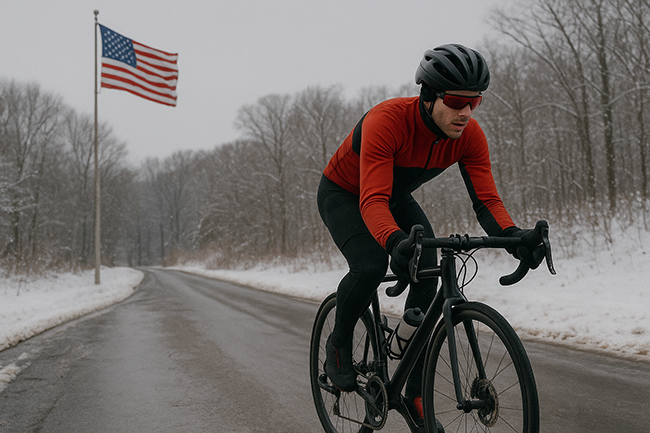
1. Rethinking Winter: From Survival to Preparation
A well-managed winter isn’t about endurance alone — it’s about setting up your body and mind for sustained performance later. Shift your mindset from “how do I stay fit?” to “how do I prepare to be faster, stronger, and fresher when it matters most?”
Winter offers the perfect window to:
• Rebuild aerobic capacity without pressure.
• Address weaknesses hidden during racing season.
• Improve technical and physical foundations like strength and mobility.
• Develop consistency and habits that last all year.
It’s slower, smarter work — less adrenaline, more intention.
2. The Mistake Most Riders Make
The number one winter pitfall? Doing the same thing, just colder.
Many riders stick to their summer rhythm — same pace, same group rides, same routes — but the body responds differently in winter. Shorter daylight hours, cooler temperatures, and accumulated fatigue change how you recover and adapt.
Without adjusting your approach, you risk hitting a mid-winter plateau or starting spring burned out. Winter training shouldn’t be a continuation of summer; it should be a reset and rebuild.
3. Build Your Winter Foundation
Think of winter as base camp for your cycling year. You’re laying the groundwork for all the fitness to come — not chasing peak power yet but putting the right systems in place.
Endurance That Counts
Long, steady rides are valuable, but only if they’re purposeful. Instead of logging arbitrary hours, focus on efficient aerobic conditioning — the ability to ride longer and recover faster.
Quality trumps quantity: a series of well-paced endurance rides beats one epic day followed by fatigue.
Cadence and Technique
Winter is perfect for refining your pedal stroke. Smooth, efficient pedaling saves energy and improves control — essential when roads are unpredictable. Include cadence drills, single-leg pedaling, and low-cadence hill efforts.
Strength and Core Stability
Cyclists spend thousands of hours in one repetitive plane. Winter is your chance to balance that. Two short gym or home sessions each week focusing on glutes, hamstrings, and core strength will transform your power delivery and reduce injury risk.
4. Indoors, Outdoors, or Both?
Virtual training platforms make winter cycling more engaging than ever. Turbo trainers offer precision and comfort, but outdoor rides still matter.
Indoor Advantages:
• Time-efficient: quality workouts in 60 minutes
• Controlled environment: no traffic, no ice
• Perfect for structured intervals
Outdoor Advantages:
• Builds real-world endurance and bike handling
• Mentally refreshing — connection to the road
• Teaches resilience and adaptability
The smartest approach blends both: indoor sessions for targeted work, outdoor rides for aerobic conditioning and skills.
5. Fuel, Hydrate, Recover
Cold weather suppresses thirst and appetite, but energy demands don’t drop — they rise.
Key Tips:
• Fuel every ride — even short sessions
• Hydrate indoors: sweat loss can rival summer heat
• Recovery nutrition: carbs + protein within 60 minutes post-ride
• Don’t diet through winter — restriction slows adaptation
Recovery isn’t just food — it’s sleep and rest. Include lighter days and a full recovery week every 4–5 weeks.
6. The Mental Game of Winter Training
Motivation dips when the weather turns. Structure and community keep you on track.
Stay motivated by:
• Setting clear goals (early-season event or performance target)
• Training with others (virtual rides or local leagues)
• Celebrating consistency, not perfection
At Ride Revolution, we see winter training as much about mindset as fitness. Riders who stay consistent — not necessarily perfect — make far greater progress by spring.
7. Adapt, Don’t Grind
Fitness isn’t built by constant hard work — it’s built by smart adaptation. Monitor heart rate, mood, and sleep. If you’re run down, reduce intensity or swap a ride for recovery. You’ll come back stronger.
Winter success isn’t about who trains the most; it’s about who trains consistently enough to still love riding in spring.
8. The Winter Training Framework
A simple three-phase outline:
• Foundation (Nov–Dec): aerobic focus, strength, mobility
• Development (Jan): introduce tempo and sub-threshold efforts
• Sharpening (Feb): short, race-specific intensity
Each phase builds on the last, ensuring sustainable progress.
9. Enjoy the Process
Winter doesn’t have to be dreary. With the right mindset and plan, it becomes one of the most rewarding parts of your cycling year.
Remember: this isn’t about perfection — it’s about progress with purpose.
Ready to Build, Not Burn Out?
Don’t let the dark months go to waste — let them work for you.
Book a free consultation with Ride Revolution today and start your best season yet.